
TIMELINE
Feb 2024 - Aug 2024
6 Months
SKILLS
User Research, Prototyping, Interaction Design, Localization Strategy, Web
TLDR
OVERVIEW
International audiences love K-content but often miss the meaning behind what they're watching. When curiosity hits, they pause, switch apps, and search for answers that never quite match the moment.
ROLE
I led end-to-end design of Kulturfy, from research and concept framing to interaction design and prototyping. I interviewed global K-content viewers to identify where curiosity peaks, synthesized insights into a unified timeline-anchored interaction model, and designed the contextual panel, timeline markers, and social layer.
IMPACT
Designed a timeline-based system that surfaces cultural context without interrupting playback.
Anchored interactions to the video timeline so that the context appears the moment curiosity hits.
Framed a scalable interaction pattern that could extend to streaming, travel discovery, and localized media.
Why global viewers stay curious but stay lost
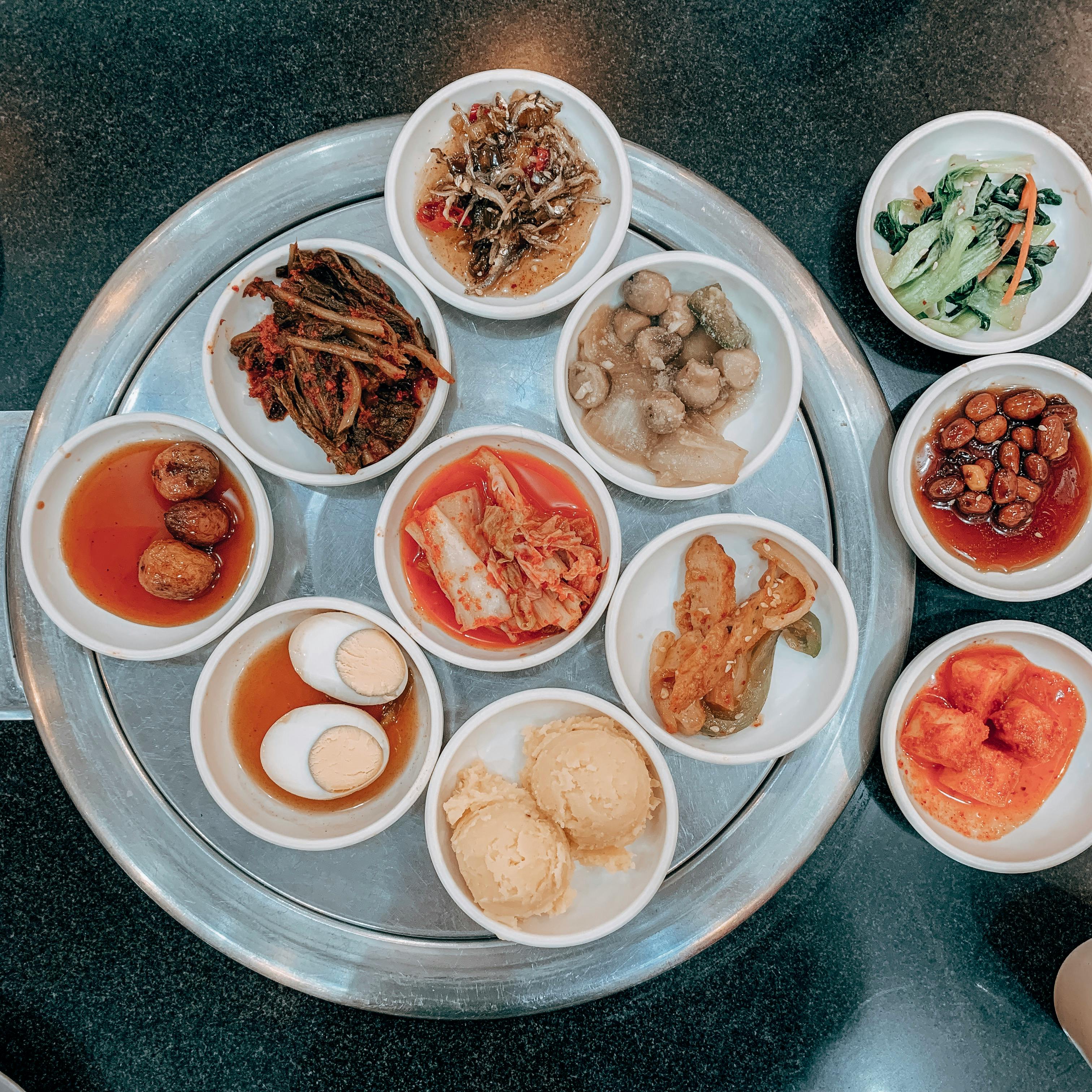
Cultural cues get missed.
Foods, gestures, places, and phrases often go unexplained.
Searching breaks immersion.
Searching for context interrupts playback and disrupts immersion.
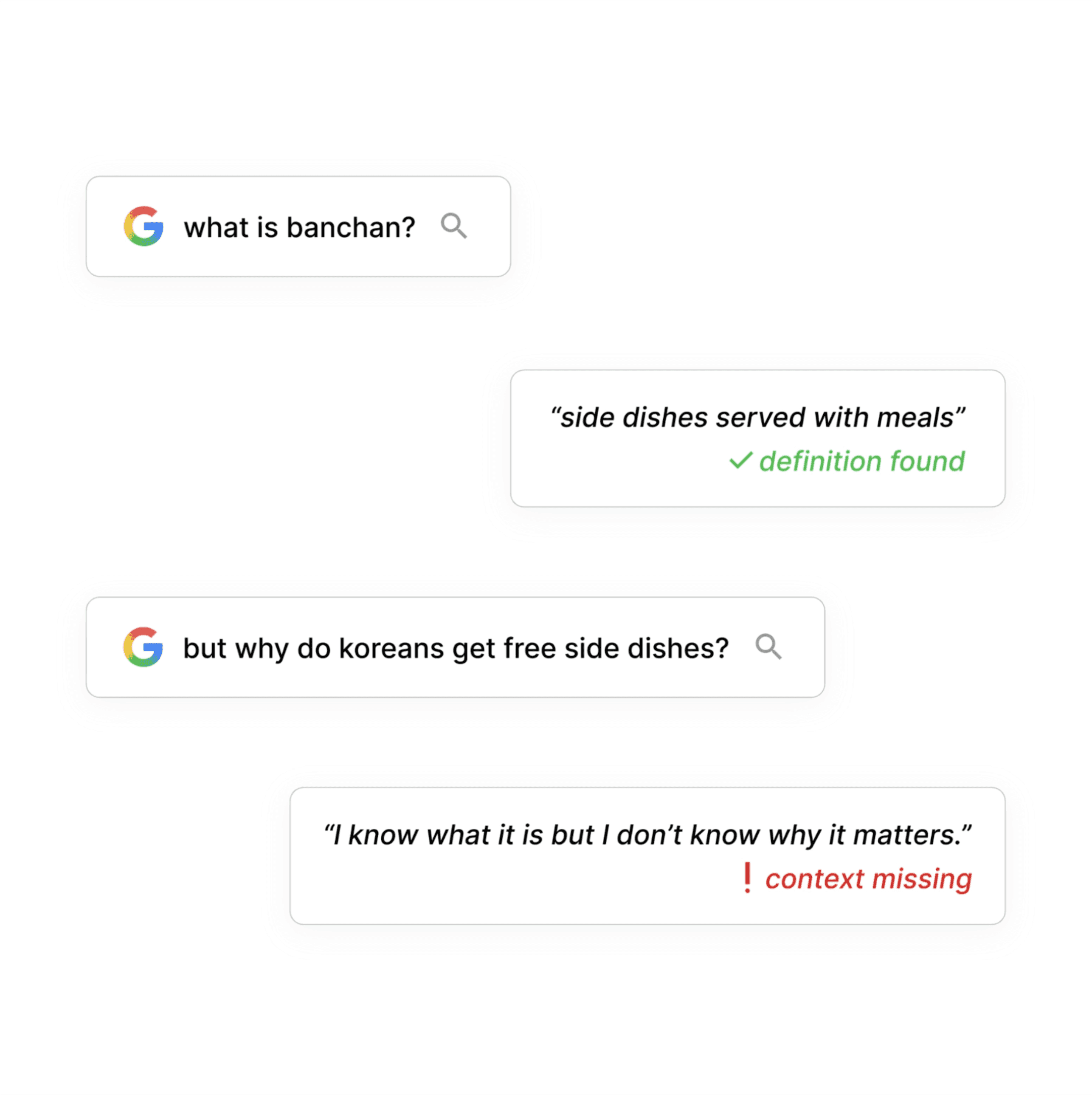
Discovery is fragmented
Even if something sparks interest, it rarely leads to real understanding.
International viewers remain engaged with the story but disconnected from the culture behind it.
Where this started
My friends and family visiting Korea for the first time kept asking the same questions while watching K-content:
What dish is that?
Where is that park?
Why did that moment matter?
Their curiosity consistently turned into Googling, which felt scattered and disconnected from the viewing experience. Seeing this pattern made me want to design a way to support cultural understanding exactly when curiosity appears.
What viewers actually do when curiosity hits
From 5 interviews and 3 observational sessions with global viewers, three patterns came up consistently. These shaped one core principle: cultural context should be time-anchored, optional, and lightweight.
Curiosity happens at specific moments, not throughout an entire episode.
Viewers want context without stopping the video.
Lived experiences make cultural explanations feel more meaningful than definitions alone.
What streaming platforms already anchor to the timeline
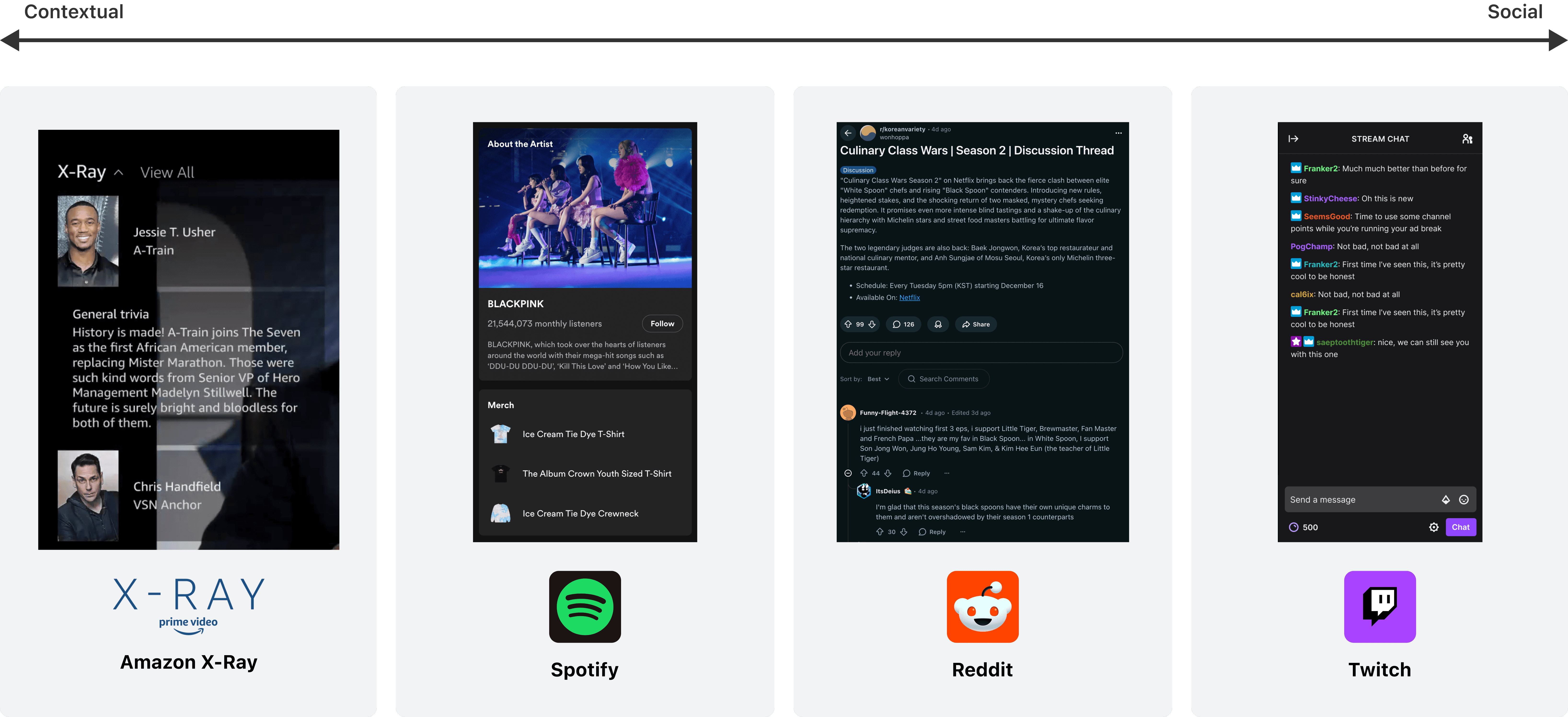
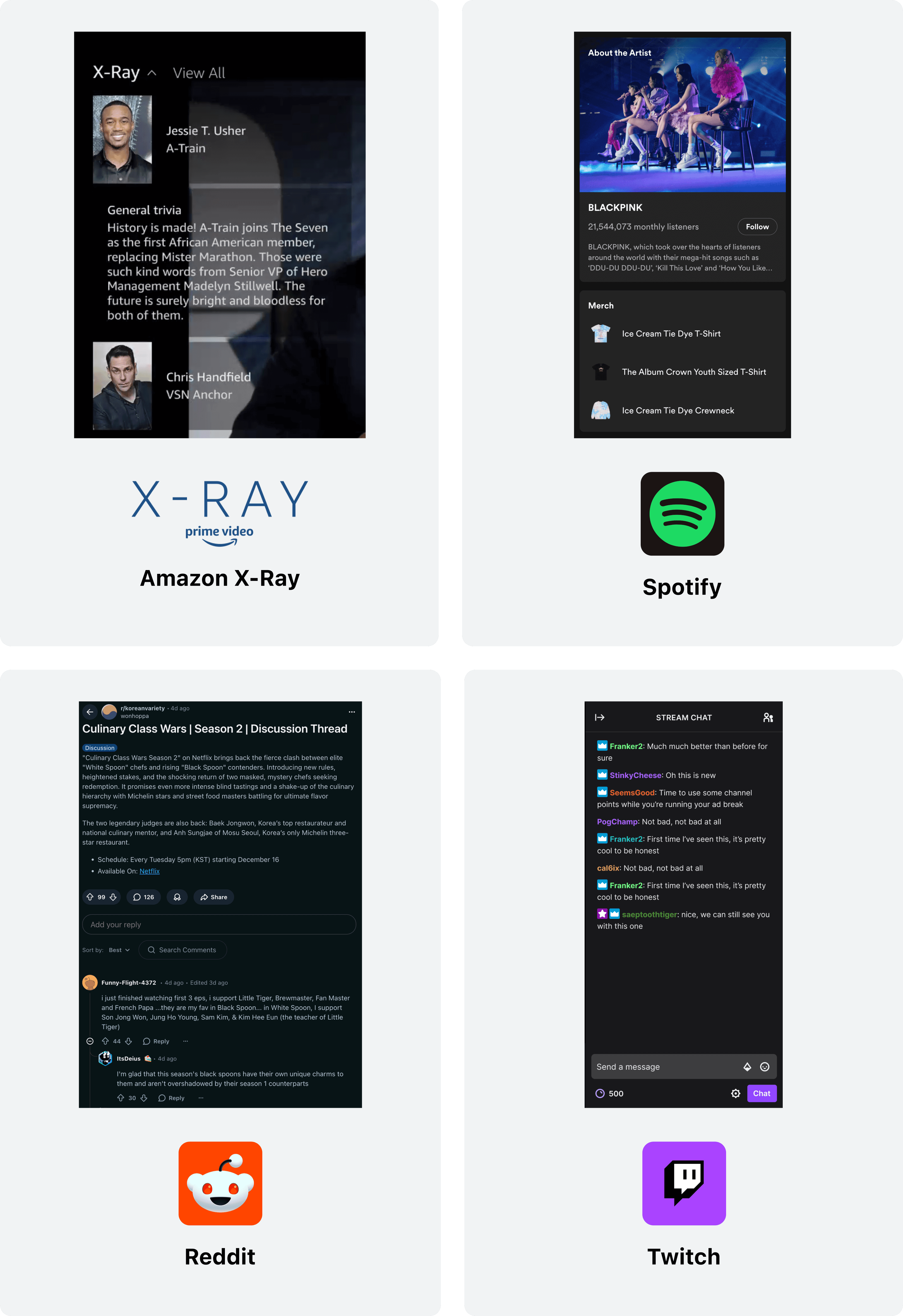
I looked at how Netflix and Amazon Prime Video surface interactions during playback. Both anchor controls and social features to the timeline but offer almost nothing for cultural understanding. That gap was the opportunity.
The reframe: timeline as the interaction anchor
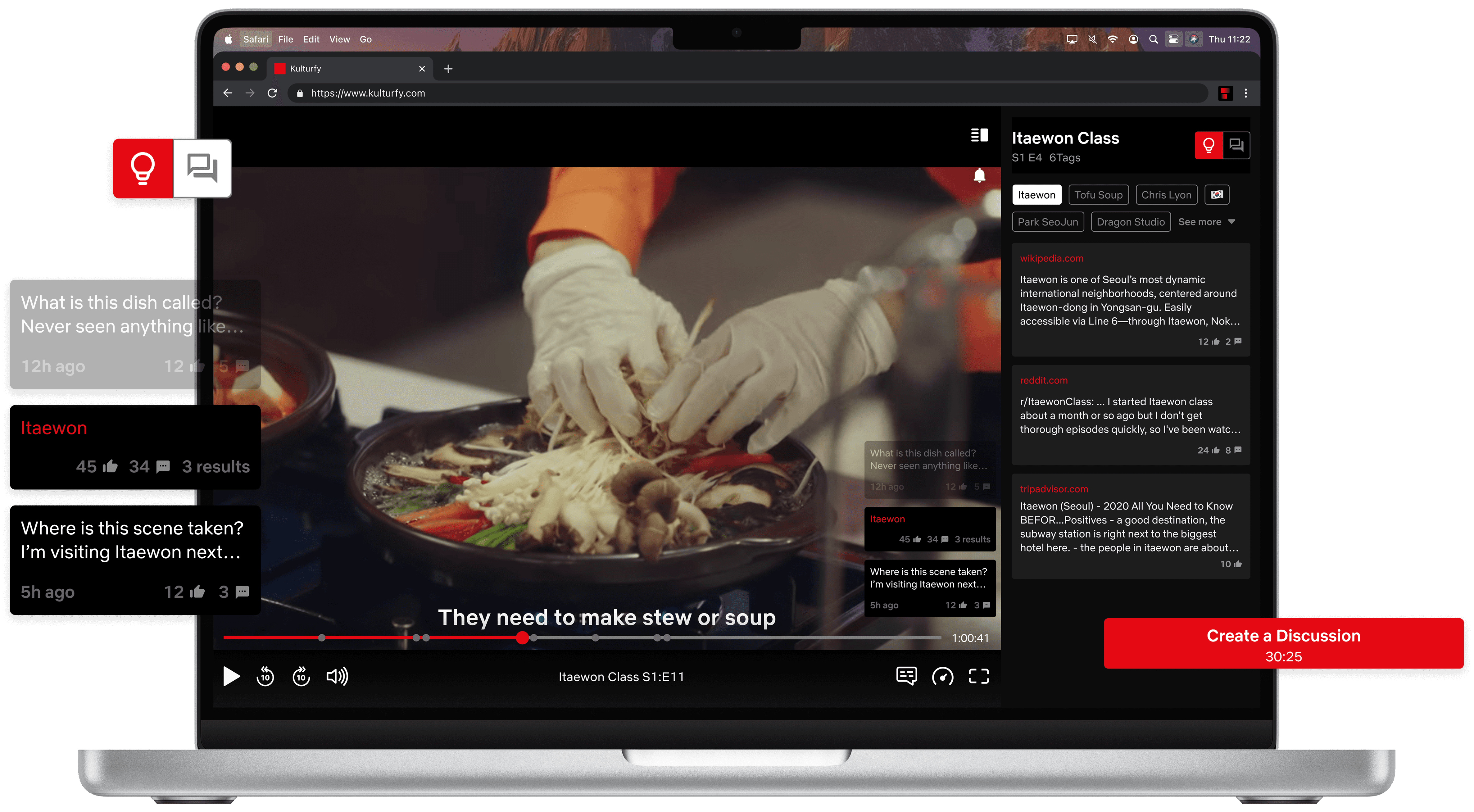
Instead of building separate features, I unified cultural context, social insight, and notifications into a single timeline-anchored system. Every interaction ties to a specific moment in the video so viewers can access meaning exactly when curiosity hits without learning new controls or breaking immersion.
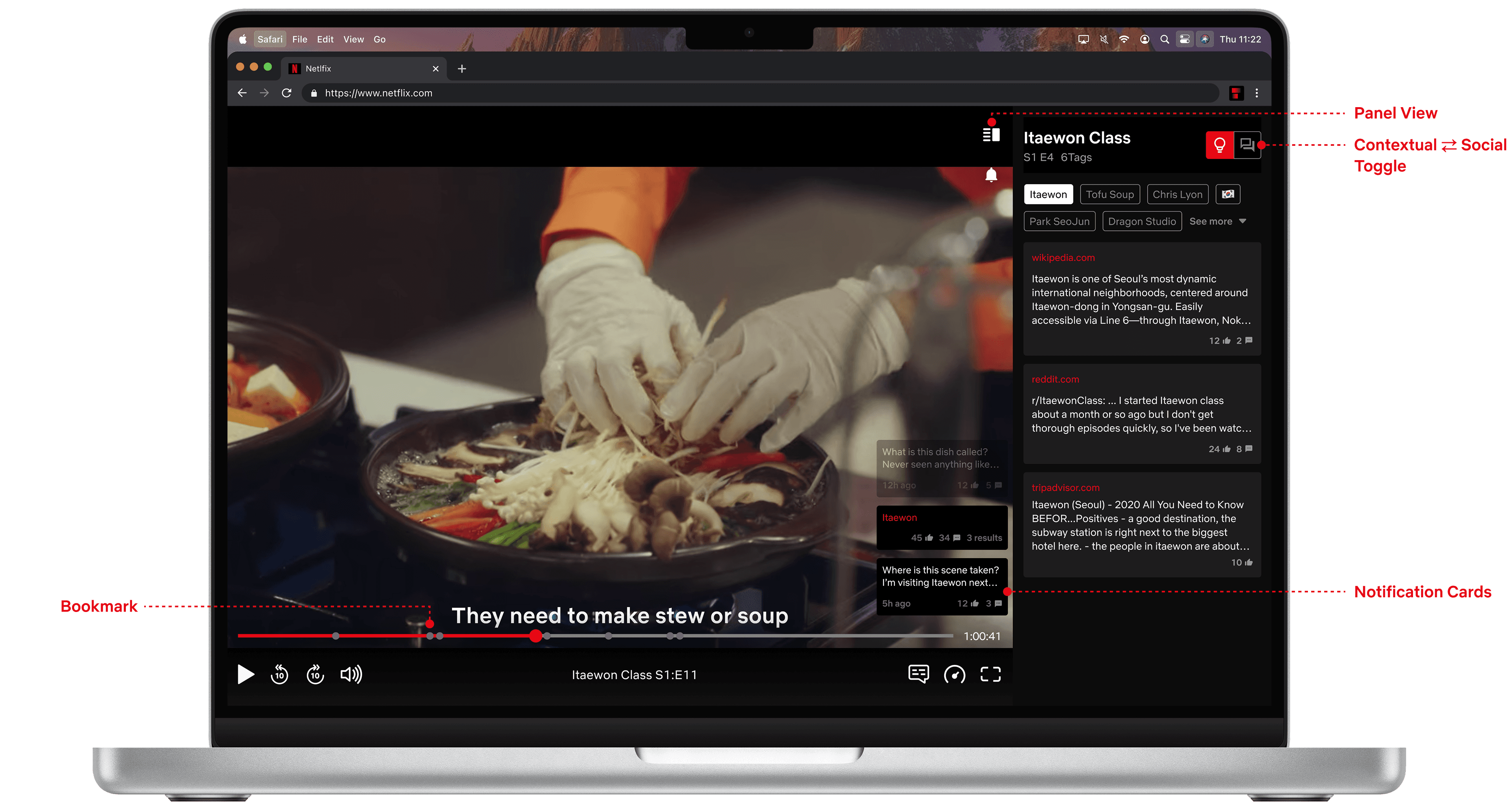
The mock-up above shows timeline markers, a contextual panel with two tabs, and notification cards, all anchored to the same moment in playback.
CORE EXPERIENCE
Kulturfy integrates cultural understanding directly into the viewing experience through a single cohesive system.
Timeline Markers
Key cultural moments appear as markers on the video timeline so viewers always know when there's something worth exploring.
Contextual Panel
Tapping a marker opens a side panel with short explanations of foods, gestures, locations, slang, or traditions. Categories help viewers focus on what matters to them and the panel can be hidden instantly to get back to full immersion.
Social Discussion
A second tab in the same panel surfaces lived experiences from fans and travelers. It adds emotional depth without introducing a separate feature.
Notification Controls
Viewers can adjust how often contextual cards appear so they can control the pace and reduce cognitive load based on their own preference.
What I learned
The hardest part was adding context without pulling people out of the show. Early on it was tempting to surface as much as possible, but more information just competed with the story. Anchoring everything to the timeline and keeping it optional was what let curiosity and immersion coexist.